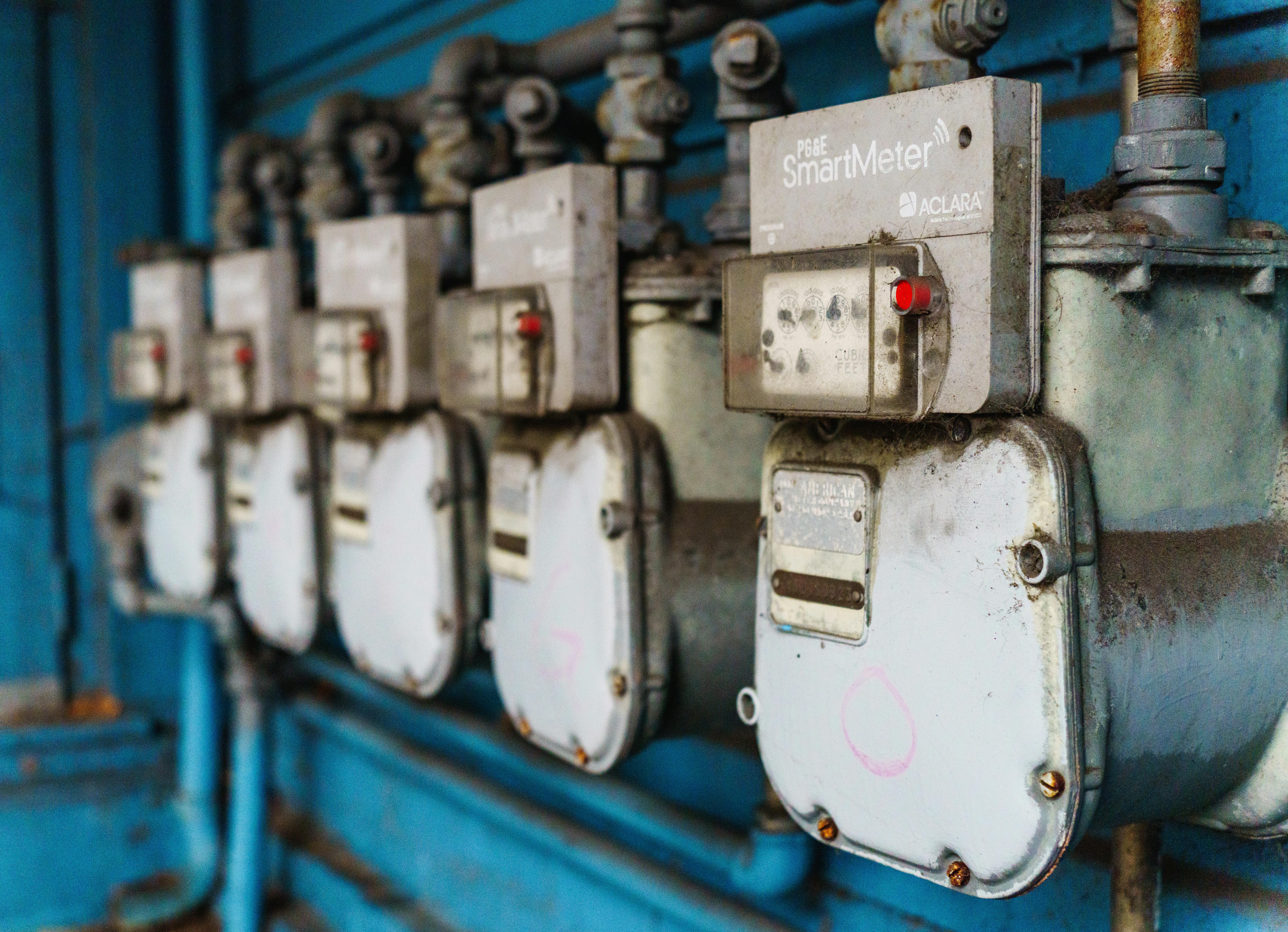
Sensor technology has revolutionized industrial automation, offering unprecedented opportunities to optimize control loops and maximize operational efficiency in modern manufacturing environments.

🎯 The Critical Role of Sensors in Control Loop Optimization
In today’s competitive industrial landscape, the difference between adequate performance and exceptional efficiency often lies in the precision of your control systems. Sensor technology serves as the eyes and ears of your automated processes, providing the critical data needed to make real-time adjustments that keep operations running at peak performance.
Control loops are the backbone of process automation, continuously monitoring conditions and making adjustments to maintain desired setpoints. However, without accurate, reliable sensor input, even the most sophisticated control algorithms cannot deliver optimal results. The quality of sensor data directly impacts loop stability, response time, and overall system efficiency.
Modern sensor technologies have evolved far beyond simple measurement devices. Today’s smart sensors offer enhanced accuracy, self-diagnostics, digital communication capabilities, and integration with advanced analytics platforms. These capabilities enable predictive maintenance, real-time optimization, and data-driven decision-making that was impossible just a decade ago.
📊 Understanding Loop Performance Fundamentals
Before diving into sensor optimization strategies, it’s essential to understand what constitutes good loop performance. Control loops are evaluated based on several key performance indicators that directly impact productivity and product quality.
Key Performance Metrics That Matter
Loop performance assessment begins with understanding settling time, overshoot, steady-state error, and response characteristics. Settling time refers to how quickly a loop returns to setpoint after a disturbance. Overshoot indicates whether the process variable exceeds the desired value during correction. Steady-state error measures the persistent difference between setpoint and actual value during stable operation.
Process variability is another critical metric. Excessive variability leads to inconsistent product quality, increased waste, and higher energy consumption. By minimizing variability through precise sensor measurements and optimized tuning, manufacturers can operate closer to specification limits, maximizing yield and reducing costs.
Response time characteristics determine how quickly a loop reacts to changes. Sluggish responses allow disturbances to persist longer, while overly aggressive responses can create instability. The right sensor technology provides the speed and accuracy needed to achieve the ideal balance.
🔧 Sensor Selection Strategies for Optimal Loop Performance
Choosing the right sensor for your application is perhaps the most critical decision in loop optimization. The wrong sensor can introduce measurement errors, drift, noise, or delays that fundamentally limit loop performance regardless of tuning efforts.
Matching Sensor Characteristics to Process Requirements
Every process has unique requirements for measurement range, accuracy, response time, and environmental tolerance. Temperature control in a pharmaceutical reactor demands far different sensor characteristics than level control in a water storage tank. Understanding your process dynamics is the first step in sensor selection.
Accuracy requirements should be determined based on the impact of measurement error on product quality and safety. Over-specifying accuracy increases costs unnecessarily, while under-specifying can make it impossible to achieve desired control performance. A good rule of thumb is selecting sensor accuracy at least three to four times better than the required process control tolerance.
Response time is often overlooked but critically important. A sensor with slow response introduces dead time into the control loop, limiting how aggressively you can tune without causing instability. For fast processes, sensor response time should be at least five to ten times faster than the dominant process time constant.
Evaluating Environmental and Installation Factors
Even the best sensor will perform poorly if not properly matched to environmental conditions. Temperature extremes, vibration, moisture, corrosive atmospheres, and electromagnetic interference can all degrade sensor performance or shorten service life.
Installation location dramatically affects measurement quality. Placement too close to disturbances introduces noise, while placement too far from the control point increases dead time. Proper installation practices including adequate straight pipe runs for flow sensors, thermowells for temperature sensors, and isolation from vibration sources are essential for reliable measurements.
⚙️ Advanced Sensor Technologies Driving Performance Gains
The sensor technology landscape has advanced dramatically in recent years, offering capabilities that enable new levels of loop performance and system intelligence.
Smart Sensors with Built-in Intelligence
Modern smart sensors incorporate microprocessors that perform signal conditioning, linearization, temperature compensation, and self-diagnostics. These capabilities eliminate external signal conditioning equipment, reduce wiring complexity, and improve measurement reliability.
Digital communication protocols like HART, Foundation Fieldbus, and Profibus enable smart sensors to transmit not just measurement values but also diagnostic information, configuration data, and status indicators. This rich data stream allows maintenance teams to identify developing problems before they cause failures or performance degradation.
Self-diagnostics capabilities detect issues like sensor drift, contamination, connection problems, and electronic failures. Early warning of sensor problems allows proactive maintenance scheduling, preventing unexpected failures that cause process upsets and production losses.
Wireless Sensors Expanding Monitoring Possibilities
Wireless sensor technology has matured to the point where it’s suitable for many industrial applications. While not appropriate for critical, fast-response control loops, wireless sensors excel at monitoring applications and slower secondary control loops where wiring costs would be prohibitive.
The elimination of wiring dramatically reduces installation costs, making it economically feasible to add measurement points that provide valuable process insights. More measurement points enable better process understanding, improved optimization, and enhanced troubleshooting capabilities.
Battery-powered wireless sensors can be deployed in locations where power access is difficult or impossible. Energy harvesting technologies that capture power from vibration, temperature differentials, or ambient light are eliminating even battery replacement requirements in some applications.
📈 Data Analytics and Machine Learning Amplifying Sensor Value
The real value of advanced sensor technology emerges when combined with modern data analytics and machine learning capabilities. Raw sensor data becomes actionable intelligence that drives continuous improvement.
Predictive Analytics for Proactive Optimization
Machine learning algorithms can analyze patterns in sensor data to predict equipment failures, process upsets, and quality excursions before they occur. This predictive capability enables proactive intervention, preventing problems rather than reacting to them.
Historical sensor data contains valuable insights about process behavior, disturbance patterns, and optimal operating conditions. Advanced analytics platforms can mine this data to identify opportunities for tuning improvements, energy savings, and capacity increases that would be impossible to discover through manual analysis.
Real-time optimization systems use sensor data combined with process models to continuously adjust setpoints and manipulated variables for optimal performance. These systems can respond to changing feedstock characteristics, ambient conditions, and production requirements faster and more precisely than human operators.
Digital Twin Technology for Virtual Testing
Digital twins—virtual replicas of physical processes—rely heavily on accurate sensor data to maintain synchronization with real-world operations. These virtual models enable testing of control strategies, tuning parameters, and operational changes without risk to actual production.
By comparing digital twin predictions with actual sensor measurements, engineers can identify model inaccuracies, process changes, and equipment degradation. This continuous validation ensures models remain accurate and useful over time.
🛠️ Practical Implementation Strategies for Maximum Impact
Successfully leveraging sensor technology for loop optimization requires a systematic approach that addresses technology selection, installation, commissioning, and ongoing maintenance.
Conducting Comprehensive Loop Audits
Loop audits identify which control loops have the greatest potential for improvement and what specific issues are limiting performance. This assessment should evaluate sensor quality, tuning parameters, valve performance, and process interactions.
Many facilities discover that a small percentage of loops account for the majority of control performance issues. Focusing improvement efforts on these high-impact loops delivers the greatest return on investment. Sensor upgrades should be prioritized based on measured performance gaps and business impact.
Loop monitoring systems can automatically flag poorly performing loops, track performance trends over time, and quantify the financial impact of control variability. This data-driven approach enables prioritization based on objective criteria rather than subjective judgment.
Establishing Sensor Maintenance Best Practices
Even the best sensors require regular maintenance to sustain peak performance. Calibration schedules should be based on sensor stability characteristics and process requirements, not arbitrary time intervals. Condition-based maintenance using self-diagnostic data can optimize calibration intervals, avoiding both unnecessary maintenance and extended operation with degraded sensors.
Documentation of sensor specifications, installation details, calibration history, and performance trends creates institutional knowledge that improves troubleshooting and supports informed replacement decisions. Digital asset management systems make this information readily accessible to maintenance and engineering teams.
💡 Emerging Trends Shaping the Future of Sensor-Based Optimization
The sensor technology landscape continues to evolve rapidly, with several emerging trends promising even greater capabilities for loop optimization and process improvement.
Edge Computing Bringing Intelligence Closer to Sensors
Edge computing architectures process sensor data locally rather than transmitting everything to centralized systems. This approach reduces network bandwidth requirements, enables faster response times, and provides resilience against network failures.
Local processing capabilities enable advanced analytics, complex control algorithms, and machine learning inference at the edge. This distributed intelligence creates more responsive, autonomous control systems that can operate effectively even when disconnected from enterprise networks.
Sensor Fusion Combining Multiple Data Sources
Sensor fusion techniques combine measurements from multiple sensors to create more accurate, reliable, and comprehensive process understanding. By integrating data from different sensor types—temperature, pressure, flow, vibration, acoustic—systems can detect subtle patterns and anomalies that individual sensors would miss.
Redundant sensor configurations using intelligent voting algorithms provide fault tolerance that enables continued operation even when individual sensors fail. This capability is especially valuable for critical control loops where reliability is paramount.
🎓 Building Organizational Capabilities for Sustained Excellence
Technology alone doesn’t deliver optimal loop performance—organizations must also develop the skills, processes, and culture needed to effectively leverage sensor capabilities.
Training and Development Investment
Control engineers, instrument technicians, and operators all need training on modern sensor technologies, data analytics tools, and optimization methodologies. This knowledge enables teams to fully utilize available capabilities and identify improvement opportunities.
Cross-functional collaboration between operations, maintenance, and engineering ensures sensor selection, installation, and optimization decisions consider all relevant perspectives. Regular performance reviews create accountability and drive continuous improvement.
Creating Feedback Loops for Continuous Improvement
Systematic collection of performance metrics, documentation of lessons learned, and sharing of best practices across facilities accelerates improvement and prevents repeated mistakes. This organizational learning compounds over time, creating sustainable competitive advantage.
Key performance indicators should track both technical metrics like loop variability and business outcomes like yield, energy consumption, and quality costs. Connecting technical improvements to business results maintains management support and justifies continued investment.

🚀 Achieving Breakthrough Performance Through Sensor Excellence
The pathway to maximized efficiency through sensor technology requires strategic vision, systematic execution, and sustained commitment. Organizations that excel in this area share several common characteristics.
They view sensors not as commodity components but as strategic assets that enable competitive advantage. Investment decisions consider total cost of ownership including installation, maintenance, and opportunity costs of poor performance, not just initial purchase price.
They establish clear performance standards, measure actual performance against these standards, and systematically address gaps. This disciplined approach ensures continuous progress rather than sporadic improvement efforts.
They leverage modern technologies including smart sensors, wireless networks, advanced analytics, and machine learning to extract maximum value from measurement data. At the same time, they maintain focus on fundamentals like proper installation, regular calibration, and effective tuning.
The integration of advanced sensor technology with optimized control strategies creates synergistic benefits that far exceed individual component improvements. Accurate, fast, reliable measurements enable aggressive tuning that minimizes variability. Reduced variability allows operation closer to constraints, increasing throughput and quality. Diagnostic data enables proactive maintenance that prevents failures and sustains performance.
As sensor technologies continue advancing and costs decline, the performance gap between leading and lagging facilities will widen. Organizations that proactively adopt and optimize sensor technologies position themselves for sustained success in increasingly competitive markets.
The journey toward maximum efficiency through sensor-enabled loop optimization is continuous rather than a one-time project. Market conditions change, equipment ages, processes evolve, and new technologies emerge. Maintaining peak performance requires ongoing attention, investment, and adaptation. However, the rewards—improved quality, increased capacity, reduced costs, enhanced safety, and greater sustainability—make this commitment worthwhile for any organization serious about operational excellence.