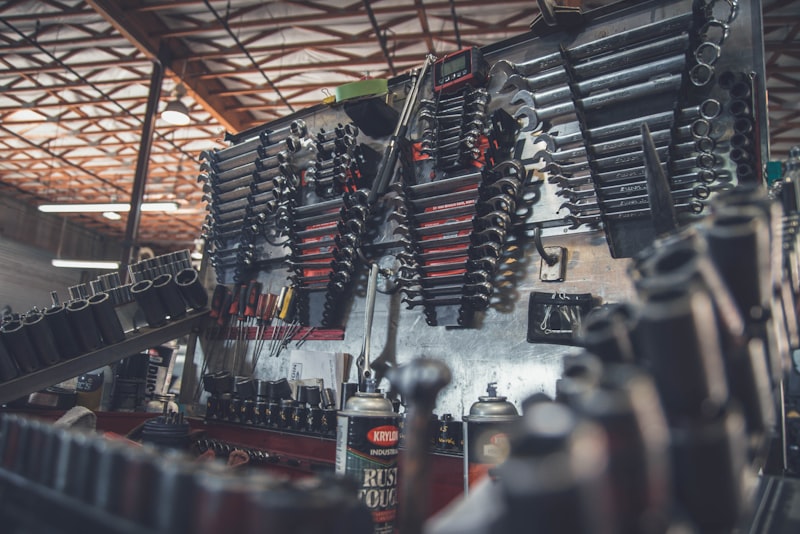
I spent years under cars for a living, and here's the thing nobody tells you: most of the breakdowns I saw were preventable. Not by some heroic skill, but by someone noticing a small thing early instead of late. A soft tire. A weeping hose. A wiper that smears instead of clears.
You don't need a lift or a toolbox the size of a fridge to stay ahead of that. You need a rhythm. So let me give you the one I'd hand a friend who asked me where to start. Quick stuff often, bigger stuff occasionally, and a clear line for what to leave to the pros.
Once a week, before you pull out of the driveway, give the car a slow walk-around. You're not inspecting anything deeply, you're just looking for what changed.
- Tires: Do they look evenly inflated? A tire that's visibly lower than its neighbors is telling you something.
- Lights: Tap the brakes with someone watching, or back up toward a wall and check the reflection. Headlights, brake lights, turn signals, reverse.
- Leaks: Glance at the spot where you park. A fresh puddle or stain is worth a second look.
- Windshield: Washer fluid topped up, wipers not torn.
That's it. You're training your eye so that when something is off, you feel it before a warning light has to shout at you.
The monthly once-over (fluids and pressure)#
Pick a date you'll remember, the first of the month works, and spend ten minutes with the engine cool and the car on level ground.
Check your tire pressure with a real gauge, not your thumb. The correct number lives on a sticker in the driver's door jamb or in your manual, not on the tire's sidewall (that's the maximum, not the target). Set them when the tires are cold, before you've driven far.
Then pop the hood and look at the fluids you can safely reach:
- Engine oil on the dipstick: pull it, wipe it, reinsert, pull again, and read the level between the marks. Note the color too. Honey to light brown is normal; gritty and black means it's getting tired.
- Coolant in the reservoir, between min and max. Only ever check this with the engine cold. Never open a hot cooling system.
- Washer fluid and, if your car has accessible reservoirs, brake and power steering fluid levels.
You're not fixing anything here. You're spotting a level that's dropping faster than it should, which is your early warning that something needs attention.
If a fluid keeps disappearing between checks, that's not a "top it up and forget it" situation. A fluid leaving the system is going somewhere it shouldn't, and that's your cue to get it looked at.
Seasonal jobs (twice a year, roughly)#
When the weather turns, your car's priorities change with it. I like to do a slightly deeper look at the start of summer and the start of winter.
Heading into the cold months, your battery works harder and your tires lose pressure faster, so check both. Make sure your washer fluid is the kind that won't freeze, and look at your wiper blades, which take a beating and tend to crack. If you live somewhere with real winters, this is when you'd think about appropriate tires.
Heading into heat, your cooling system and air conditioning earn their keep. This is a good moment to have someone confirm the coolant is in good shape and the belts and hoses aren't dried out and cracking. Cabin and engine air filters are cheap, easy seasonal swaps on many cars too.
None of these are exotic. They're just the chores that don't need doing every week but absolutely shouldn't wait a year.
Follow the book, not the myth#
Here's where I'll save you from a lot of bad advice. The single most reliable maintenance schedule for your car is the one printed in your owner's manual. Oil intervals, filter changes, timing belt or chain service, transmission fluid, spark plugs, all of it is laid out there for your exact engine and model.
The intervals you hear quoted at parties or online are someone else's car, someone else's driving, and often someone else's decade. Severe driving, lots of short trips, towing, dust, extreme heat or cold, can all shorten those intervals. So treat any number you read, including from me, as illustrative. The manual wins.
If you've lost your manual, the manufacturer almost always has a digital copy, and a good shop can pull the schedule for your VIN.
What to leave to a shop#
I'm all for doing your own checks. But there's a clear line between checking and fixing, and some jobs sit firmly on the other side of it.
Hand these to a qualified mechanic with the right equipment:
- Brakes of any kind, including pads, rotors, lines, and the hydraulic system.
- Steering and suspension components.
- Anything that requires getting under a raised car. If you ever lift a car, it must be on properly rated jack stands on solid, level ground. A jack alone is for lifting, never for holding. People have been killed by cars that were "just going to be up for a second."
- Airbags and other restraint systems, and any high-voltage components on hybrids and EVs.
There's no shame in this. Knowing what you can safely handle and what you can't is exactly what a good mechanic wishes more drivers understood.
Make it a habit, not a project#
The reason checklists fail is that people treat them like a big event. Don't. The weekly glance is two minutes. The monthly check is ten. The seasonal jobs are an afternoon, twice a year.
Do that much, keep your manual close, and let a trusted shop handle the heavy and safety-critical work, and you'll catch the small stuff while it's still small. That's the whole game. Your future self, standing dry and unstranded on the side of no road in particular, will thank you.