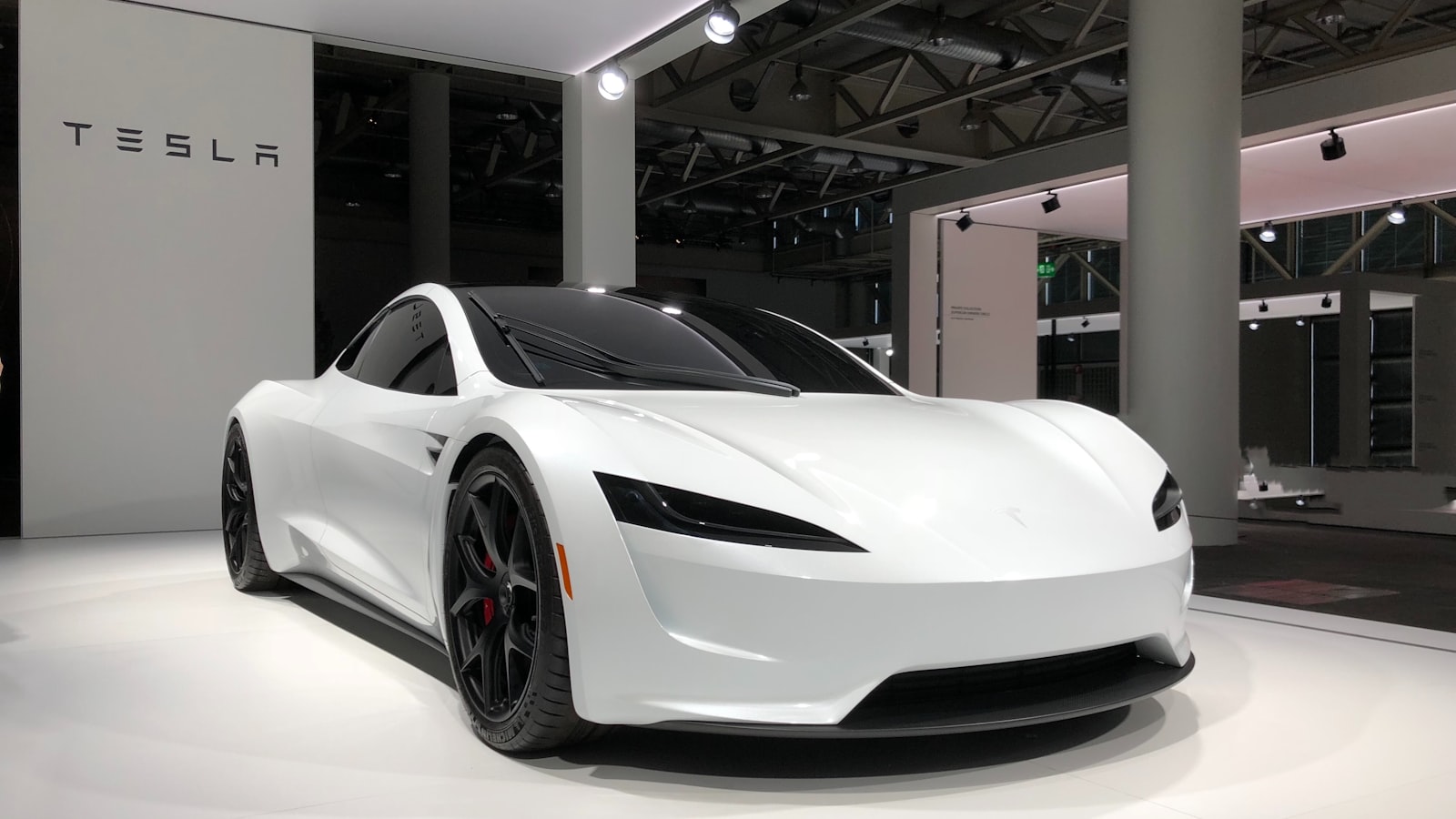
Pop the hood on an electric car for the first time and your first reaction is usually, "Wait — that's it?" No oil cap to hunt for, no belts snaking around, no exhaust note when you turn it on. If you grew up around gas engines like I did, it feels almost too quiet to be real. But once you understand the handful of parts doing the work, an EV stops being mysterious and starts making a lot of sense.
Let me walk you through it the way I'd explain it leaning on a fender in the garage — no jargon, no sales pitch.
The Three Parts That Matter#
Strip away the badges and software, and every electric car comes down to three things working together.
The battery is the fuel tank. Instead of holding liquid, it stores electricity in a big pack of cells, usually mounted low in the floor. That low placement is a happy side effect — it keeps the car's weight down near the road, so EVs tend to feel planted and stable in corners.
The motor is the engine's replacement, and it's a beautifully simple device. Feed it electricity and it spins. That's most of the story. Because an electric motor makes its pulling power the instant it starts turning, an EV moves off the line smoothly and immediately — no revving, no waiting for the right gear.
The controller is the brain in the middle. It decides how much electricity flows from the battery to the motor based on how hard you press the pedal. Think of it as a very fast, very precise valve.
That's genuinely the core of it. A gas car has hundreds of moving parts in the engine and transmission alone. An EV's drivetrain has a small fraction of that, which is a big reason there's so little routine maintenance — no oil changes, no spark plugs, no timing belts.
Regen Braking: The Trick That Surprises People#
Here's the part that delights most new EV drivers once it clicks. When you lift off the accelerator, the motor can run backward — acting as a generator instead of a driver. It uses the car's own momentum to make electricity and sends it back into the battery. This is regenerative braking, or "regen."
Two things happen at once. The car slows down noticeably without you touching the brake pedal, and a little energy you'd otherwise waste as heat gets recovered. On many EVs you can drive most of the time with just the accelerator — press to go, lift to slow. People call it "one-pedal driving," and after a week it feels completely natural.
Regen isn't free energy — you never get back more than you put in. It's just refusing to throw away energy you've already paid for, which over a lot of stop-and-go driving genuinely adds up.
Your normal friction brakes are still there for hard or emergency stops. A nice bonus: because regen does so much of the gentle slowing, brake pads on EVs often last far longer than on a comparable gas car.
BEV, PHEV, Hybrid — Knowing What You're Looking At#
"Electric" gets used loosely, and the labels trip people up. Here's the plain-language version of the three main types you'll run into:
- BEV (Battery Electric Vehicle): Fully electric. It only has a battery and motor, it plugs in to charge, and it never burns fuel. This is what most people picture when they say "EV."
- PHEV (Plug-in Hybrid): A smaller battery plus a gas engine. You can plug it in and drive a limited distance on electricity alone, then the gas engine takes over for longer trips. Two systems in one car.
- Hybrid (conventional): Has a gas engine and a small battery, but you never plug it in. It charges its own little battery through regen and the engine, using the electric part mainly to boost efficiency. It's really a smarter gas car.
The simplest way to keep them straight: only the BEV runs purely on electricity, and only the BEV and PHEV plug in. A regular hybrid never sees a charging cable.
Which one fits you depends on your life, not on which is "best." But that's a whole conversation of its own — for now, just knowing the categories puts you ahead of most showroom small talk.
What's Genuinely Different to Live With#
So how does owning one actually feel different day to day? A few honest observations from people who've made the switch.
You stop going to the gas station. With a BEV, you mostly charge at home overnight and start each morning "full." That alone reshapes the routine more than anything else. Instead of detouring to fill up when you're low, you plug in when you park, the way you charge a phone.
It's quiet, and quick. The lack of engine noise takes a day to get used to and then you love it. The instant response off the line makes city driving feel effortless.
You think in terms of charging, not filling. Topping up from a wall outlet at home is slow and steady; public fast chargers are quick but you plan around them on longer trips. That shift in mindset — from a five-minute splash-and-dash to "where and when will I plug in" — is the real learning curve. It's not hard, just new.
Maintenance gets quieter too. No oil to change means fewer routine shop visits. You'll still rotate tires, top up washer fluid, and replace cabin filters and wiper blades — the ordinary stuff. The drivetrain just asks for a lot less attention.
One safety note worth saying plainly: the battery and its wiring run at high voltage, far beyond a normal 12-volt system. The car is built to keep that safely sealed away, and there's nothing you'd ever touch in daily driving. But anything involving the high-voltage system — orange cables, the battery pack, related repairs — is strictly work for a qualified professional with the right training and tools. This is general background, not a repair guide. When in doubt, leave it to the pros.
The Takeaway#
An EV isn't a spaceship. It's a battery, a motor, and a clever brain, doing the same job as a gas car with fewer parts and a couple of genuinely neat tricks. Once you see it that way, the only real adjustment is rethinking how you "fill up" — and most people find that part easier than they expected. Start there, get comfortable, and the rest falls into place.